手作り味噌:ご近所さんと紡ぐ冬の習慣
フランスから移住した中能登町移住プランナーのデルフィンです。
田舎の暮らしには、最初は気づかないリズムがある。それは季節ごとに、儀式のように、そして何度も繰り返される営みの中で、ゆっくりと姿を現す。2月に味噌を仕込むことは、私にとってそんなリズムのひとつになった。
今年もまた、ご近所さんや友人と集まって、手作りの味噌を仕込んだ。昨年ほど寒くはなかった今年の冬——少しだけ穏やかな冬だったけれど、私たちは古くからの知恵に従った。使った水は地元の湧き水で、一年で最も冷える1月にくんでおいたものだ。能登では、この時期の水が最も純粋で、発酵に最適だと信じられている。
仕込みの工程、一歩ずつ
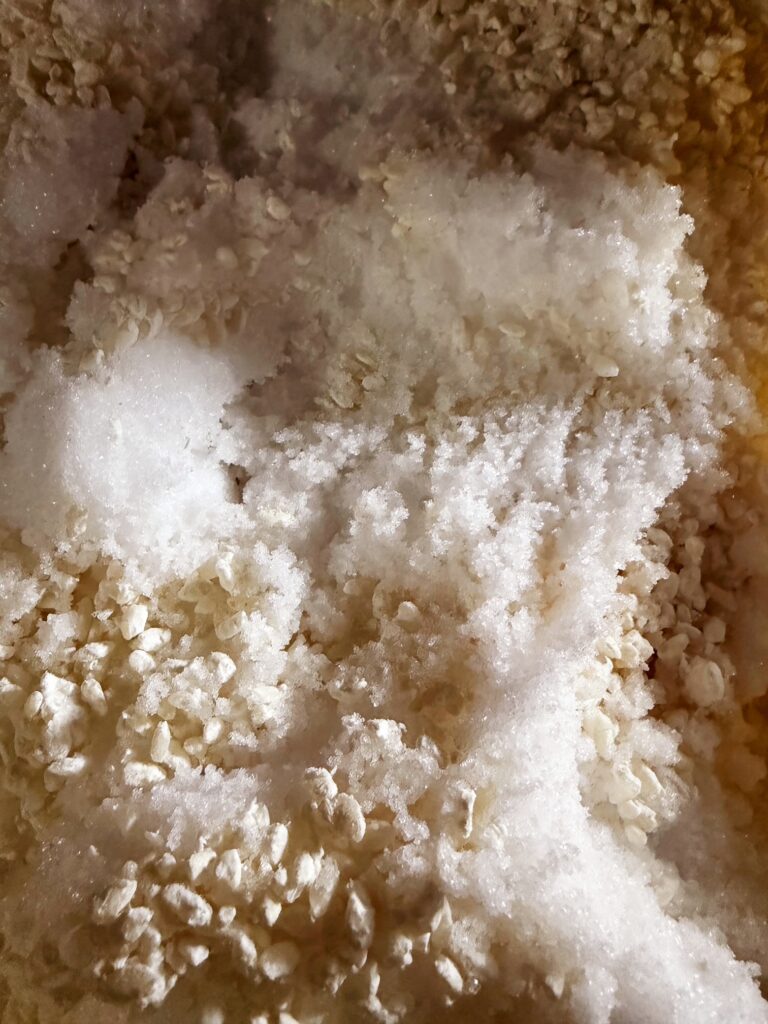
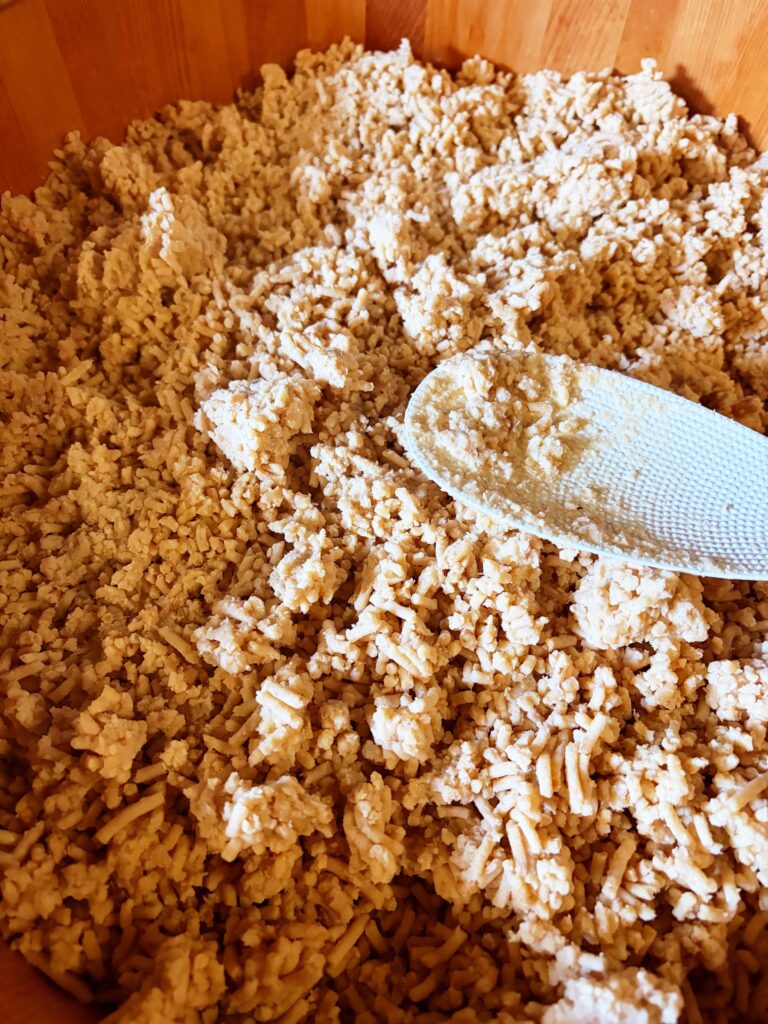
私たちは、隣の家の土間に集まった。こうした作業のためにあるような、伝統的な土間の空間だ。そこでまず、糀(こうじ)と塩を混ぜ合わせる。このシンプルな組み合わせが、やがてすべての土台となる。
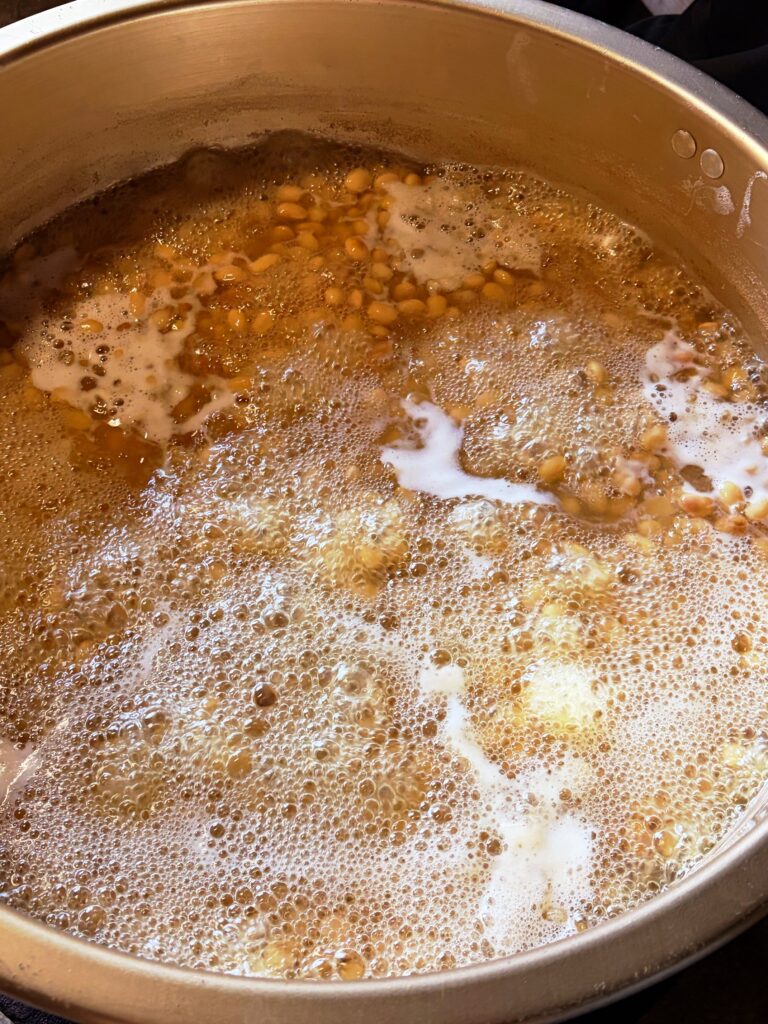
一晩水に浸しておいた大豆は、久江に住む地元の農家であり友人でもある彼が育てたものだ。大切に取っておいた湧き水で大きな鍋にかけ、茹でていく。土間に立ち上る湯気が、豆が柔らかく変わっていく、あのどこか懐かしい香りを運んでくる。
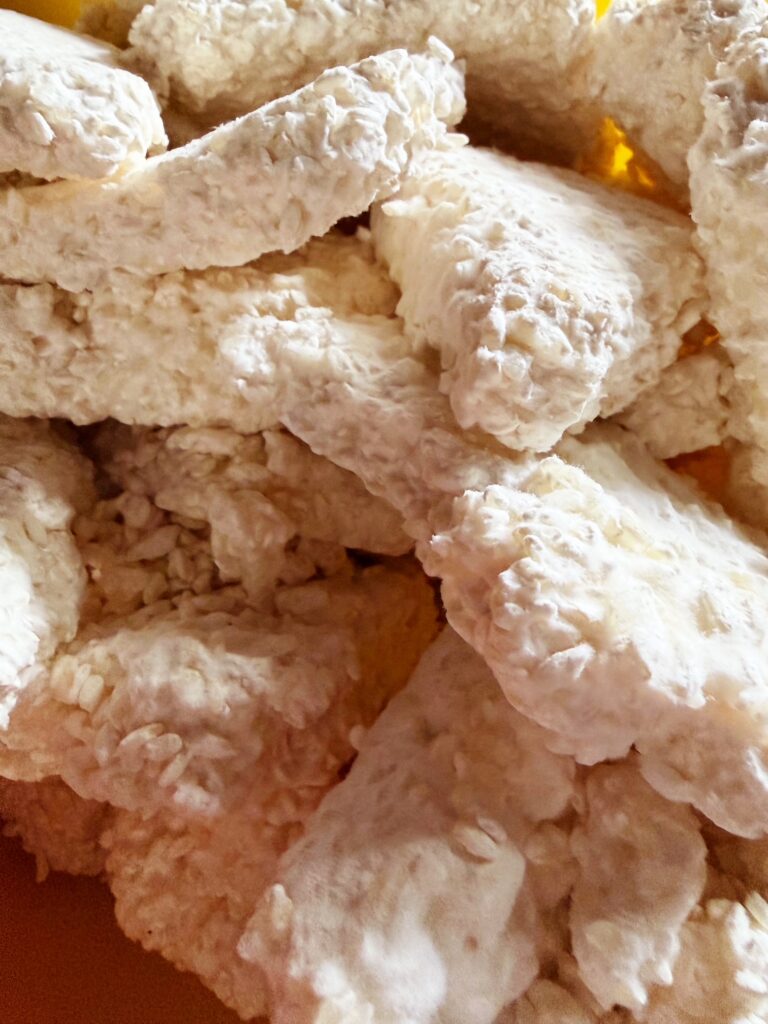
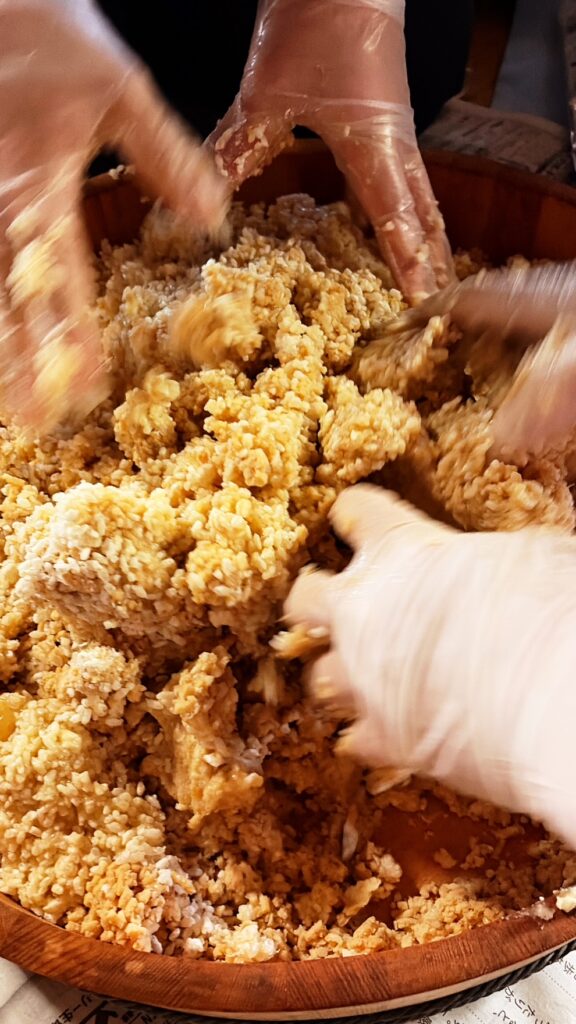
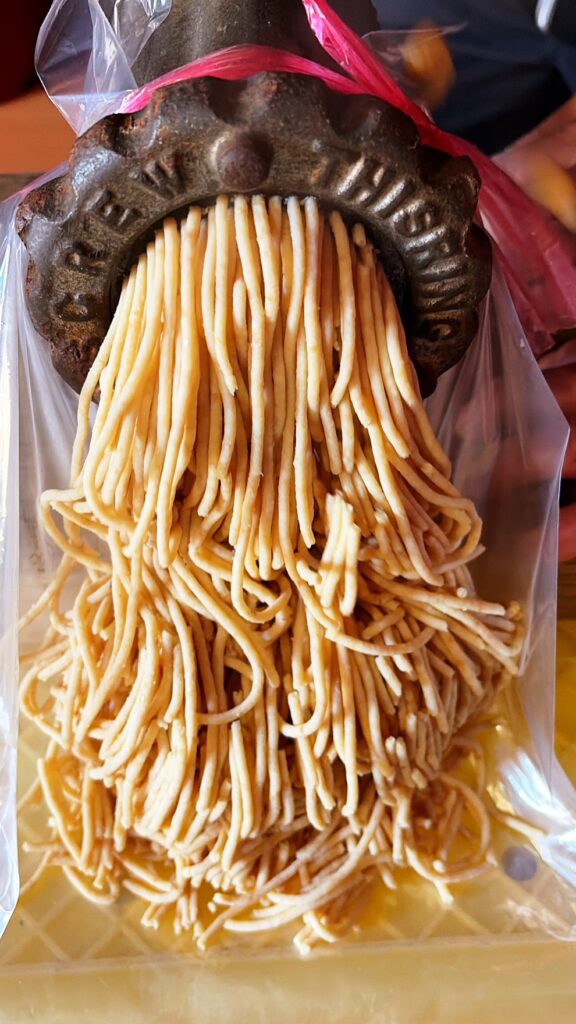
豆が柔らかくなったら、粗いペースト状に潰していく。目の前で素材が姿を変えていく瞬間は、いつも不思議な満足感がある。そして、いよいよ混ぜ合わせる時が来る——潰した豆に糀と塩の混合物を加え、ひとつになるまで丁寧に練り上げる。
次は楽しい作業だ。味噌をひとつかみずつ握って団子にし、それを容器めがけて「えいっ」と投げ入れる。小さな儀式のようなものだ。空気の層を取り除き、味噌がしっかりと詰まるようにするためでもある。
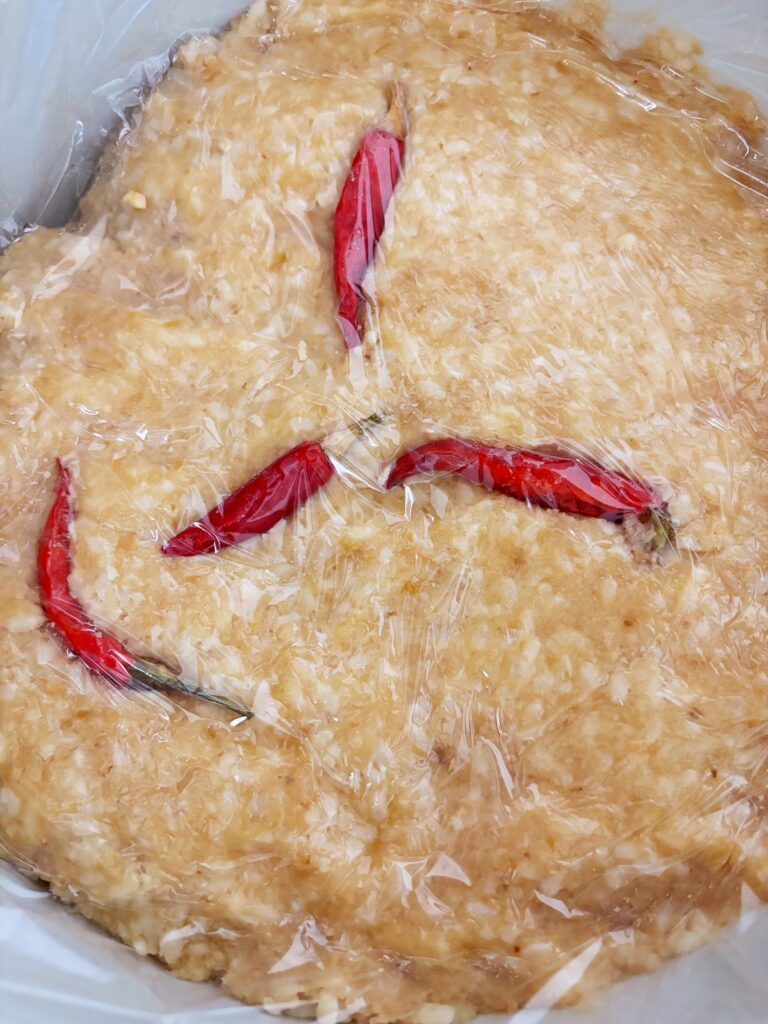
重しをのせる前に、乾燥唐辛子を数本、そっと表面に置く。辛みのためではない。これは守りのため——長い発酵の間、虫を寄せ付けず、味噌を守ってくれるのだ。表面をラップで覆い、容器を密閉したら、あとは寝かせるだけ。暗くて涼しい場所へと運び、数ヶ月の眠りにつかせる。
待つ時間のはじまり
これから私たちは待つ。夏に一度、天地返しと呼ばれる撹拌のため開けるだけで、あとはじっくりと時間をかける。そして約10ヶ月後、再び冬が巡ってくる頃、この味噌は食べごろを迎える。
この長い時間の流れには、何とも言えない深い満足感がある。何もかもが即座に手に入る世界にあって、味噌を仕込むことは忍耐の行為であり、信頼の行為だ。時間と手間が、シンプルな素材を豊かで滋味深いものに変えてくれると信じること。
初めて味わう日を、もう想像している。冬の湧き水を使い、久江の友人が育てた豆を使い、2月の午後の笑い声と共に仕込んだ味噌で作る、一杯の味噌汁を。
今はまだ、容器は静かに暗がりで眠りながら、ゆっくりと仕事を続けている。そして私たちは待つ。
Handmade Miso: A Winter Tradition Shared with Neighbours
There is a rhythm to life in the countryside that you don’t notice at
first. It reveals itself slowly—through seasons,through rituals,and
through the quiet repetition of things done together. Making miso every
February has become one of those rhythms for me.
This year,I gathered again with my neighbours and a friend to make our
annual batch of handmade miso. The day was not as cold as last year—winter
has been gentler this time around—but we still followed the old wisdom. The
water we used came from a local spring,drawn in January during the coldest
period of the year. In Noto,we believe that water taken at this time is
the purest and best for fermentation.
The Process,Step by Step
We gathered in the doma—the traditional earthen-floored entrance of my
neighbour’s house,a space designed for work like this. There,we began by
mixing koji (the rice malt that works its magic on the beans) with salt.
This simple combination would later become the base for everything.
The soybeans,grown by a local farmer and friend here in Kue,had been
soaked overnight and were ready for cooking. We boiled them in a large pot,
using the precious spring water we had saved. Steam rose into the cool air
of the doma,carrying that familiar,comforting smell of beans softening
into something new.
Once the beans were tender,we minced them into a coarse paste. This is the
satisfying part—watching the transformation happen right before your eyes.
Then came the moment of mixing: combining the bean paste with the koji and
salt mixture,working it all together until it became one uniform,fragrant
dough.
Then came the fun part. We formed the miso into balls and,one by one,
threw them with purpose into the waiting container. It’s a small ritual—a
way of releasing any air pockets and ensuring the miso settles firmly.
Before adding the weight,we placed a few dried chillies delicately on top.
Not for heat,but for protection—they help deter insects and keep the miso
safe during its long fermentation. Then we covered the surface with plastic
wrap,sealed the container,and carried it to its resting place—a dark,
cool corner where it will sleep for months.
The Waiting Begins
Now we wait. In summer,we will open it once to mix it,a brief
interruption to its long fermentation. And then,in about ten months,when
winter comes around again,this miso will be ready to eat.
There is something profoundly satisfying about this long timeline. In a
world that wants everything now,making miso is an act of patience,of
trust,of believing that time and care will transform simple ingredients
into something rich and nourishing.
I can already imagine the first taste—a bowl of miso soup made with miso we
crafted together,using water from a winter spring,beans grown by a friend
in Kue,and the shared laughter of a February afternoon.
For now,the container sits quietly in the dark,doing its slow work. And
we wait.
*Miso Fait Maison : Une Tradition Hivernale Partagée avec les Voisins*La vie à la campagne a un rythme qu’on ne perçoit pas au début. Il serévèle lentement — à travers les saisons,à travers les rituels,et àtravers la répétition tranquille des choses faites ensemble. Préparer lemiso chaque mois de février est devenu l’un de ces rythmes pour moi.Cette année,je me suis à nouveau réunie avec mes voisins et une amie pourconfectionner notre batch annuel de miso artisanal. La journée n’était pasaussi froide que l’an dernier — l’hiver a été plus doux cette fois-ci —mais nous avons tout de même suivi la sagesse ancienne. L’eau utiliséeprovenait d’une source locale,puisée en janvier pendant la période la plusfroide de l’année. À Noto,on croit que l’eau prélevée à ce moment est laplus pure et la meilleure pour la fermentation.Le Processus,Étape par ÉtapeNous nous sommes rassemblées dans le doma — l’entrée traditionnelle au solen terre battue de la maison de ma voisine,un espace conçu pour ce genrede travaux. Là,nous avons commencé par mélanger le koji (le malt de rizqui opère sa magie sur les haricots) avec du sel. Cette simple combinaisonallait devenir la base de tout.Les graines de soja,cultivées par un agriculteur local et ami ici à Kue,avaient trempé toute la nuit et étaient prêtes à être cuites. Nous lesavons fait bouillir dans une grande marmite,en utilisant la précieuse eaude source que nous avions conservée. La vapeur s’élevait dans l’air fraisdu doma,portant cette odeur familière et réconfortante des haricots qui setransforment en quelque chose de nouveau.Une fois les haricots tendres,nous les avons réduits en une pâtegrossière. C’est la partie satisfaisante — voir la transformation s’opérersous nos yeux. Puis est venu le moment du mélange : combiner la pâte deharicots avec le mélange de koji et de sel,en travaillant le tout jusqu’àl’obtention d’une pâte uniforme et parfumée.Ensuite est venue la partie amusante. Nous avons formé le miso en bouleset,une par une,nous les avons lancées avec détermination dans lerécipient qui les attendait. C’est un petit rituel — une façon de libérerles poches d’air et d’assurer que le miso se tasse fermement.Avant d’ajouter le poids,nous avons délicatement placé quelques pimentsséchés sur le dessus. Pas pour le piquant,mais pour la protection — ilsaident à dissuader les insectes et à garder le miso en sécurité pendant salongue fermentation. Puis nous avons recouvert la surface d’un filmplastique,scellé le récipient,et l’avons porté à son lieu de repos — uncoin sombre et frais où il dormira pendant des mois.L’Attente CommenceMaintenant,nous attendons. En été,nous l’ouvrirons une fois pour lemélanger,une brève interruption de sa longue fermentation. Et puis,dansenviron dix mois,quand l’hiver reviendra,ce miso sera prêt à être dégusté.Il y a quelque chose de profondément satisfaisant dans cette longuetemporalité. Dans un monde qui veut tout tout de suite,faire du miso estun acte de patience,de confiance,de la croyance que le temps et les soinstransformeront des ingrédients simples en quelque chose de riche et denourrissant.J’imagine déjà la première dégustation — un bol de soupe miso préparée avecce miso que nous avons façonné ensemble,utilisant l’eau d’une sourcehivernale,des haricots cultivés par un ami de Kue,et les rires partagésd’un après-midi de février.Pour l’instant,le récipient repose tranquillement dans l’obscurité,accomplissant son lent travail. Et nous attendons.
投稿者プロフィール

関連ブログ
 プランナーブログ2026年3月29日春の最初の味わい:能登の土筆と蕗
 プランナーブログ2026年3月10日手作り味噌:ご近所さんと紡ぐ冬の習慣
 お知らせ2026年3月2日静けさの前に:中能登の2月、小さな庭での準備
 プランナーブログ2026年2月3日予期せぬ冬